The Journal of Creative Works

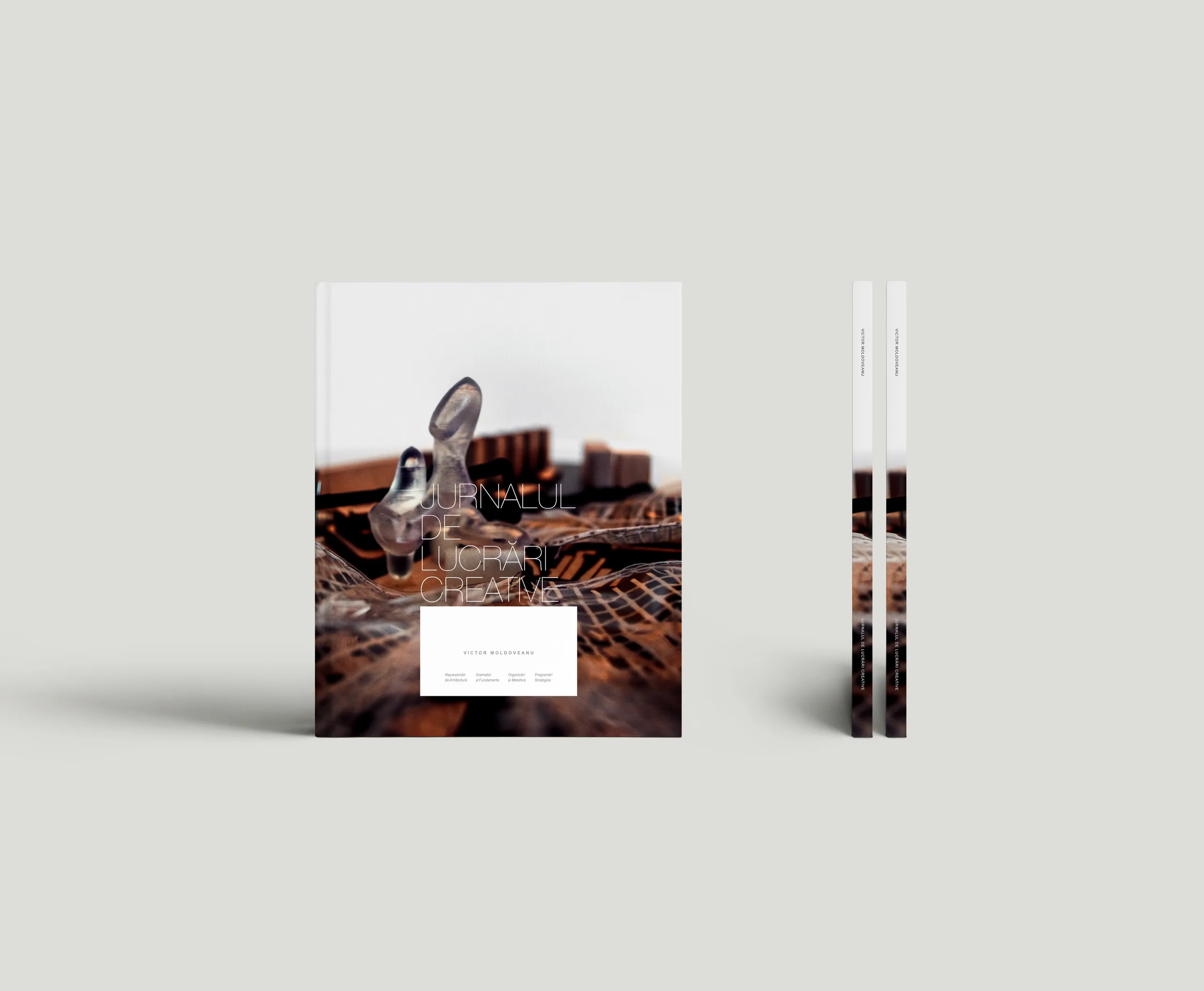
The Journal of Creative Works brings together four volumes of studies developed between 2008 and 2016 — 15 projects exploring representation, space, architecture and urbanism. Three of these volumes originally existed as independent publications, later revised and incorporated into the Journal.
The Journal is organised into four chapters according to the subject, scale and discourse addressed: Architecture and Illustration, Grammar and Fundamentals, Organising Metaphors and Strategic Programming. Its mission is to investigate the Pursuit of Knowledge, approaching each project as a new opportunity to rigorously explore and examine new design strategies and techniques. This mission was consistently pursued through self-reflective thinking, enthusiasm, diligence and dedication.
Jurnalul de Lucrări Creative constituie ansamblul celor patru volume de studii dezvoltate între 2008 și 2016 — 15 proiecte care explorează reprezentarea, spațiul, arhitectura și urbanismul. Trei dintre aceste volume au existat inițial ca publicații independente, ulterior revizuite și integrate în Jurnal.
Jurnalul este organizat în patru capitole, în funcție de subiectul, scara și discursul abordate: Reprezentări de Arhitectură, Gramatici și Fundamente, Organizări și Metafore și Programări Strategice. Misiunea Jurnalului este de a cerceta Lupta Cunoașterii, asumând fiecare proiect ca pe o nouă oportunitate de a explora și examina riguros noi strategii și tehnici de design. Această misiune a fost urmărită consecvent prin gândire autoreflexivă, entuziasm, diligență și dedicare.

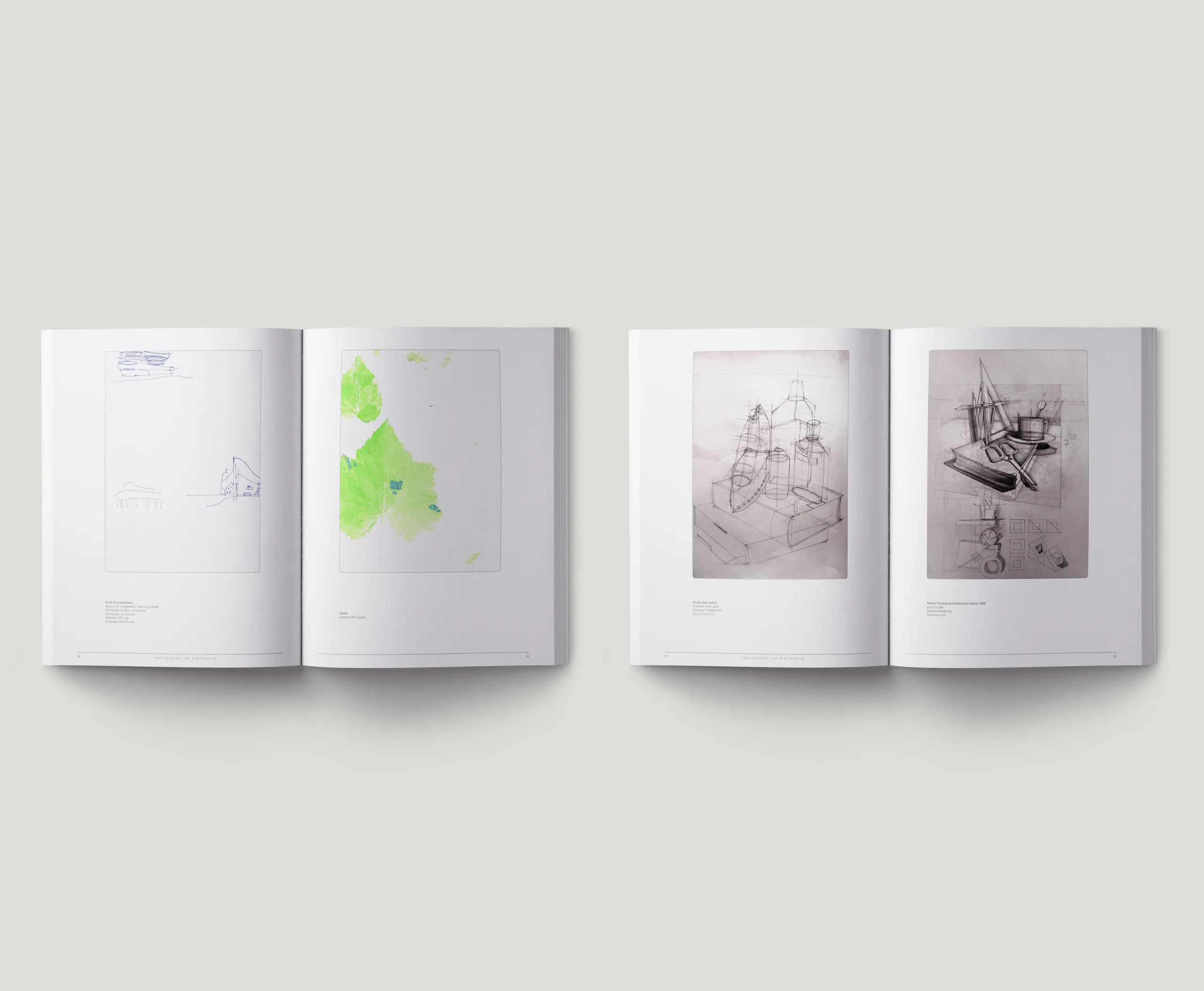
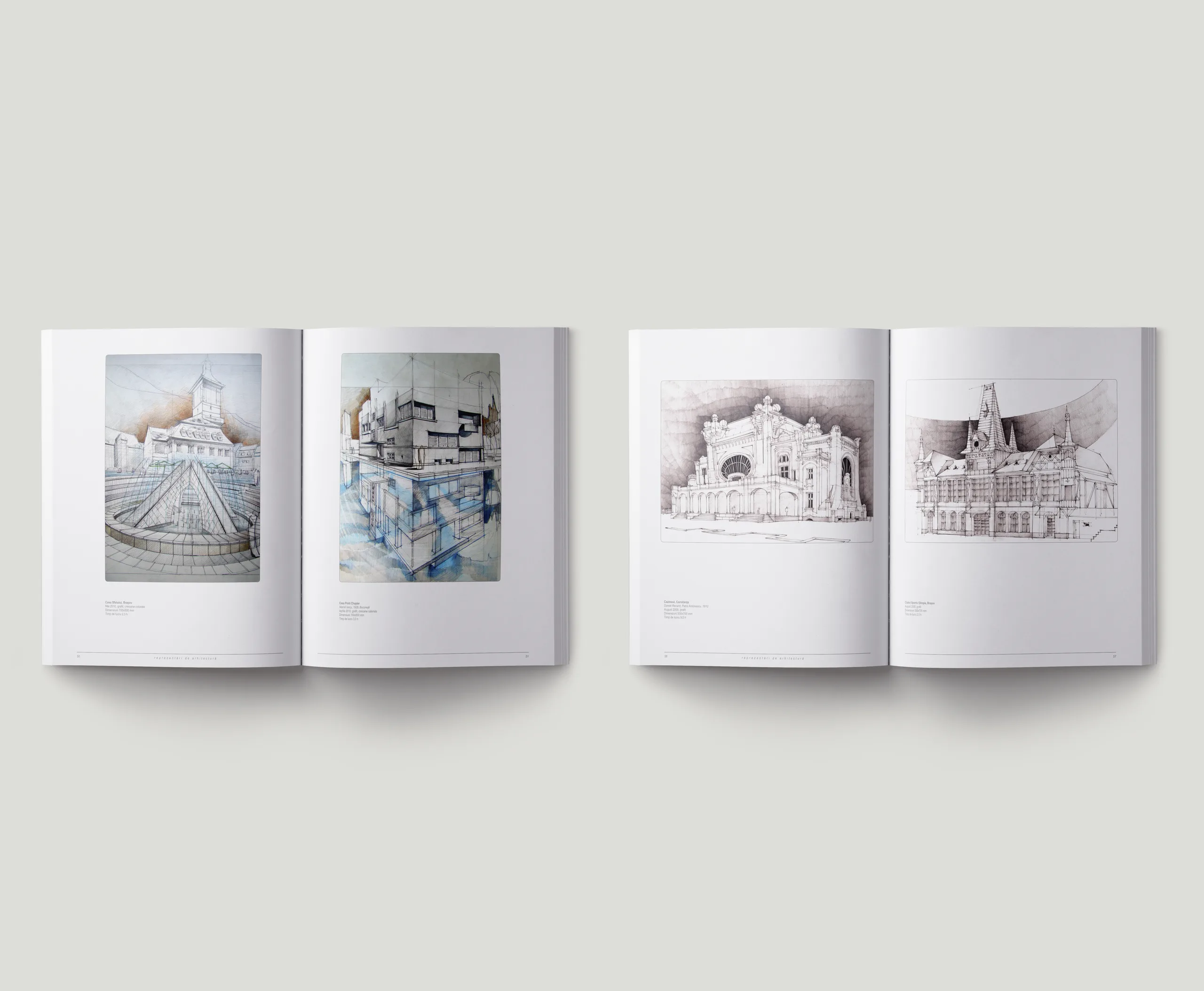
Reprezentări de Arhitectură deschide Jurnalul de Lucrări Creative printr-un studiu vizual al reprezentării spațiale. Prezentată într-o succesiune cronologică, lucrarea urmărește o redescoperire critică personală, mai degrabă decât o etalare estetică.
Studiul este organizat după reguli simple de formă, compoziție și culoare, utilizând o metodă de prezentare duală. Aceasta relevă evoluții sau involuții, teme singulare sau recurente, tensiuni calitative și cantitative, precum și persistențe sau discontinuități ale anumitor elemente de limbaj și tehnică. În paralel, este urmărită atât creșterea scării de reprezentare, cât și atribuirea, prin desen, a unor semnificații tot mai complexe.
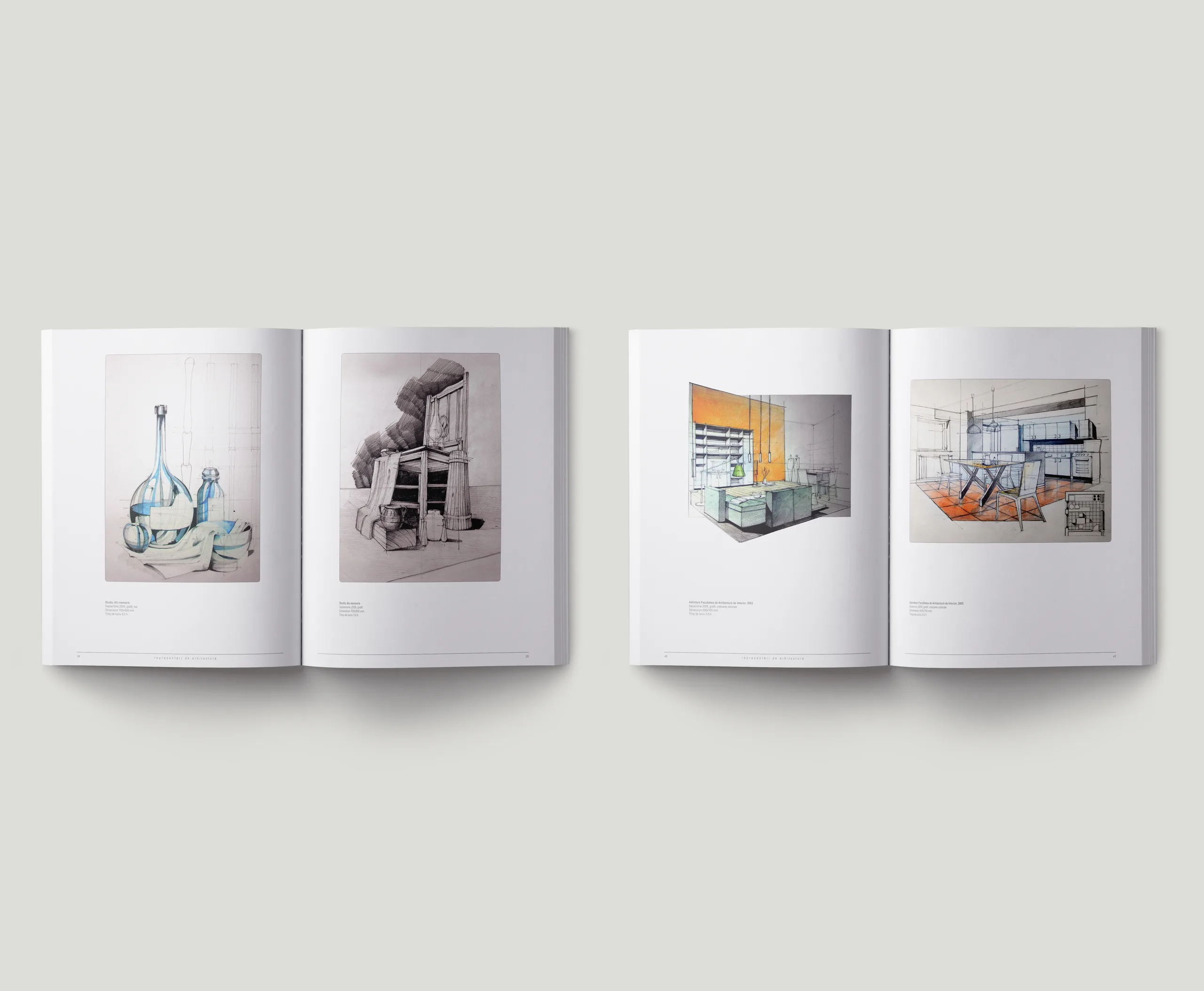
Astfel, trecem de la obiect la obiecte — obiecte ordonate; de la obiecte la mai multe obiecte — un interior; de la un interior la mai multe interioare — o casă; de la o casă la mai multe case — un oraș. Progresiv, trecem și de la descrierea explicită la cea sintetică, apoi de la desenul creator la cel de punere în operă — thinking & making — pentru a ajunge la narațiuni și argumentări filosofice care contestă însăși limitele disciplinei.
Când pictez obiecte mă gândesc la ele, nu mă uit la ele. — Pablo Picasso
Architecture and Illustration opens The Journal of Creative Works with a visual survey of spatial representation. Presented chronologically, the work is intended as an exercise in personal and critical rediscovery rather than aesthetic display.
The study is organised following simple rules of form, composition and colour, using a dual presentation method. This reveals evolutions or involutions, singular or recurring themes, qualitative and quantitative tensions, as well as the persistence or discontinuity of certain elements of language and technique. At the same time, it traces both the increasing scale of representation and the degree to which diverse meanings are attributed through drawing.
Thus, we move from the object to objects — ordered objects; from objects to several objects — an interior; from one interior to several interiors — a house; and from one house to several houses — a city. Progressively, we also move from explicit description to synthesis, and then from creative drawing to the drawing of realisation — thinking & making — in order to reach mental narratives and philosophical arguments that challenge the very limits of the discipline.
I paint objects as I think them, not as I see them. — Pablo Picasso
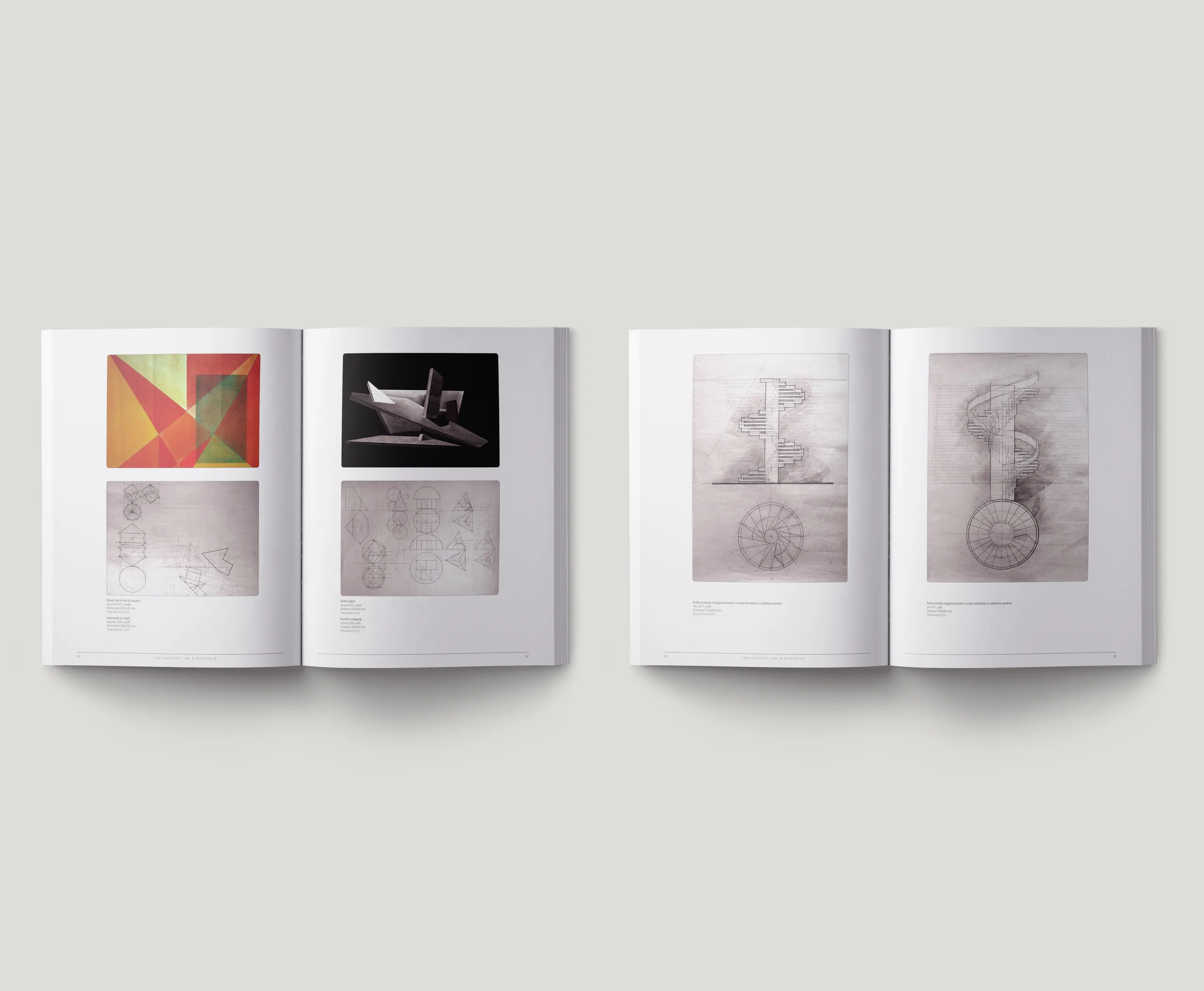

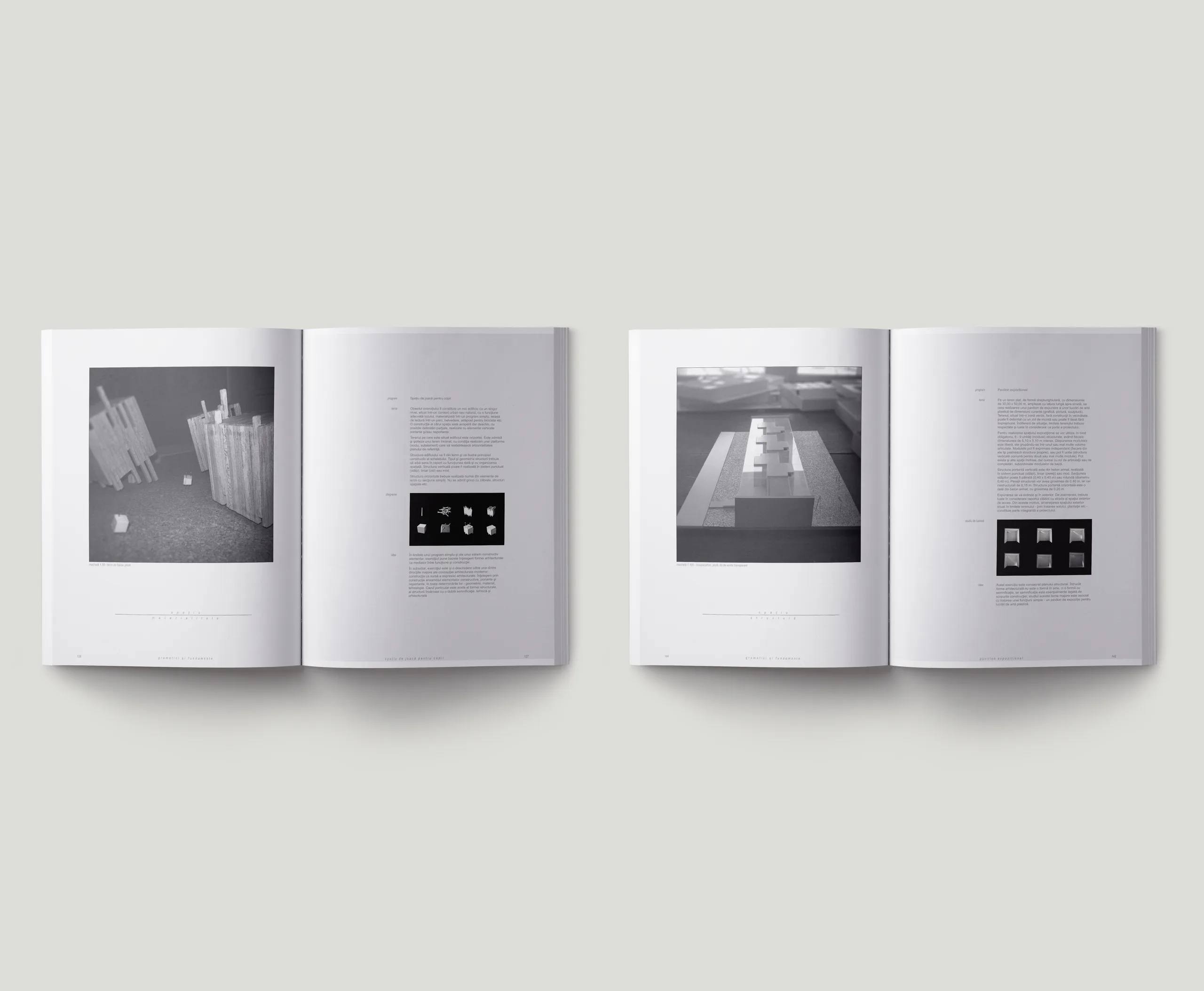
Gramatici și Fundamente este al doilea capitol al Jurnalului de Lucrări Creative. Acesta cuprinde patru exerciții realizate între 2010 și 2011, care descriu primele tentative de ordonare a spațiului și formulează o primă poziție: respectul pentru originea proiectului. Studiul generează idei și fluxuri care, în mod subconștient, construiesc atitudini.
Cele patru exerciții au fost reunite inițial în volumul 4 Minimal Projects, prima încercare de a organiza proiectele într-un obiect editorial. Volumul a fost ulterior revizuit și integrat în Jurnalul de Lucrări Creative sub forma celui de-al doilea capitol, Gramatici și Fundamente.
Grammar and Fundamentals is the second chapter of The Journal of Creative Works. It comprises four exercises developed between 2010 and 2011, describing the earliest attempts to order space and establishing an initial position: respect for the origin of the project. The study generates ideas and flows that subconsciously construct attitudes.
The four exercises were originally brought together in the volume 4 Minimal Projects, the first attempt to organise the projects into an editorial object. The volume was later revised and incorporated into The Journal of Creative Works as its second chapter, Grammar and Fundamentals.
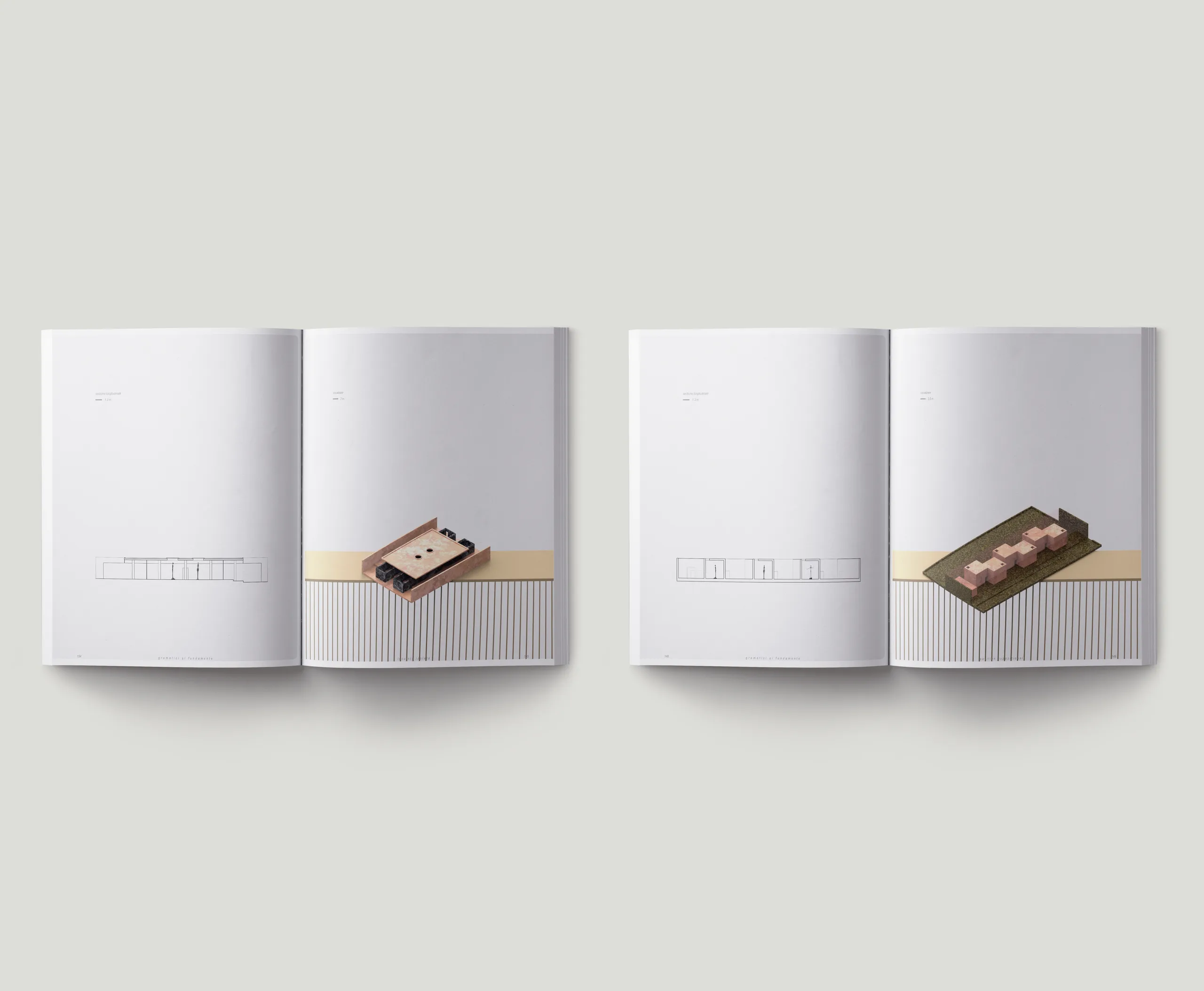
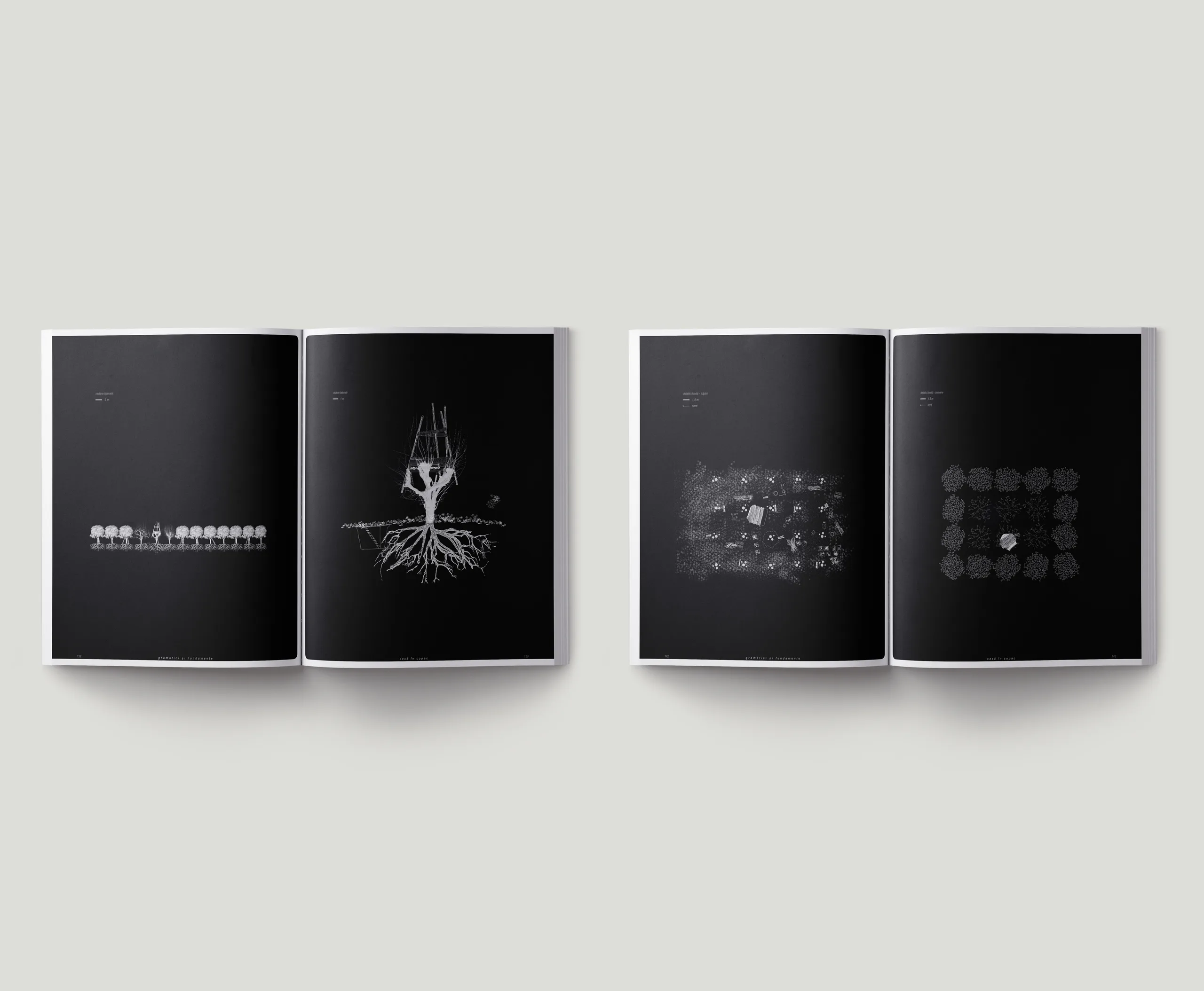

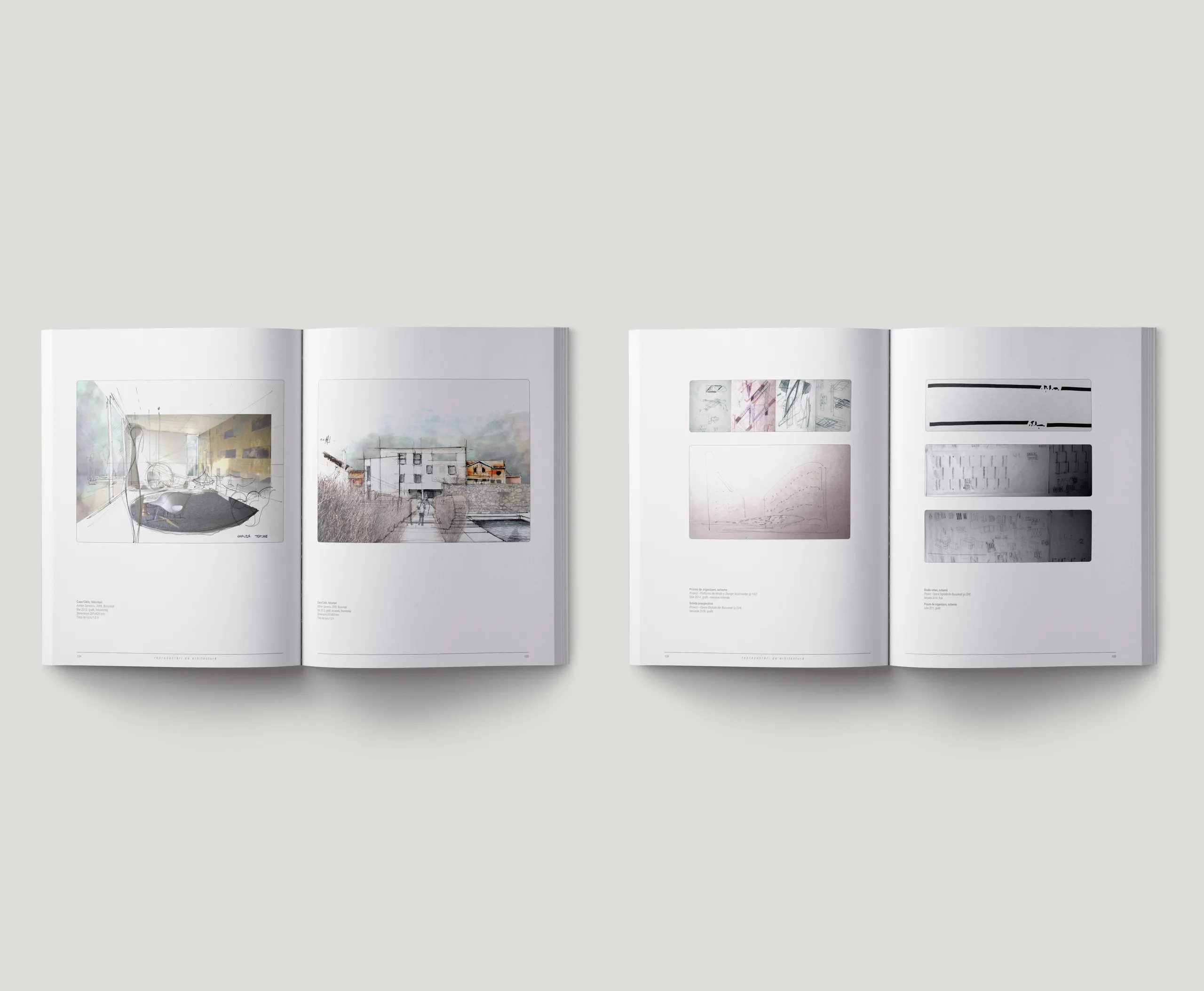
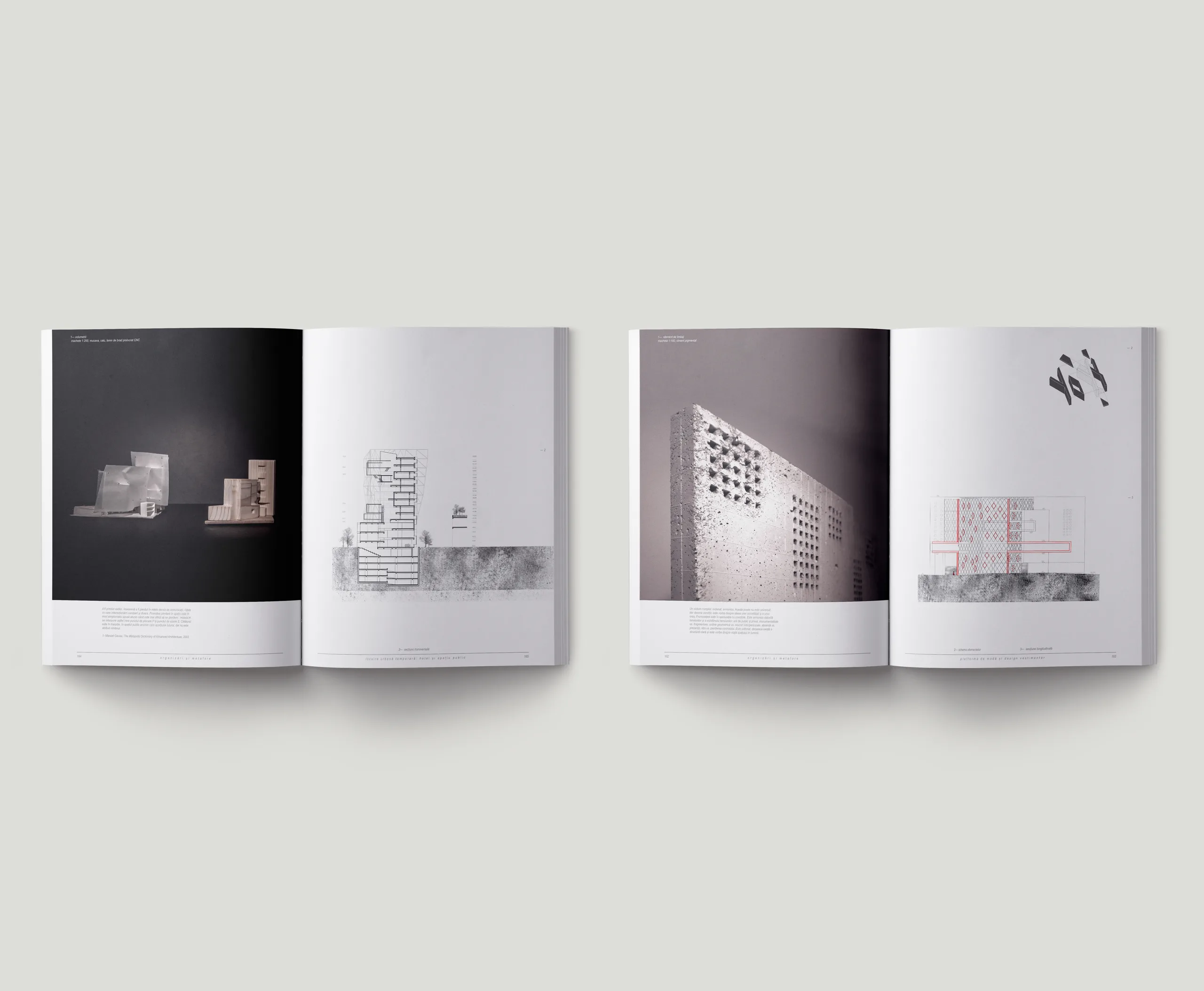
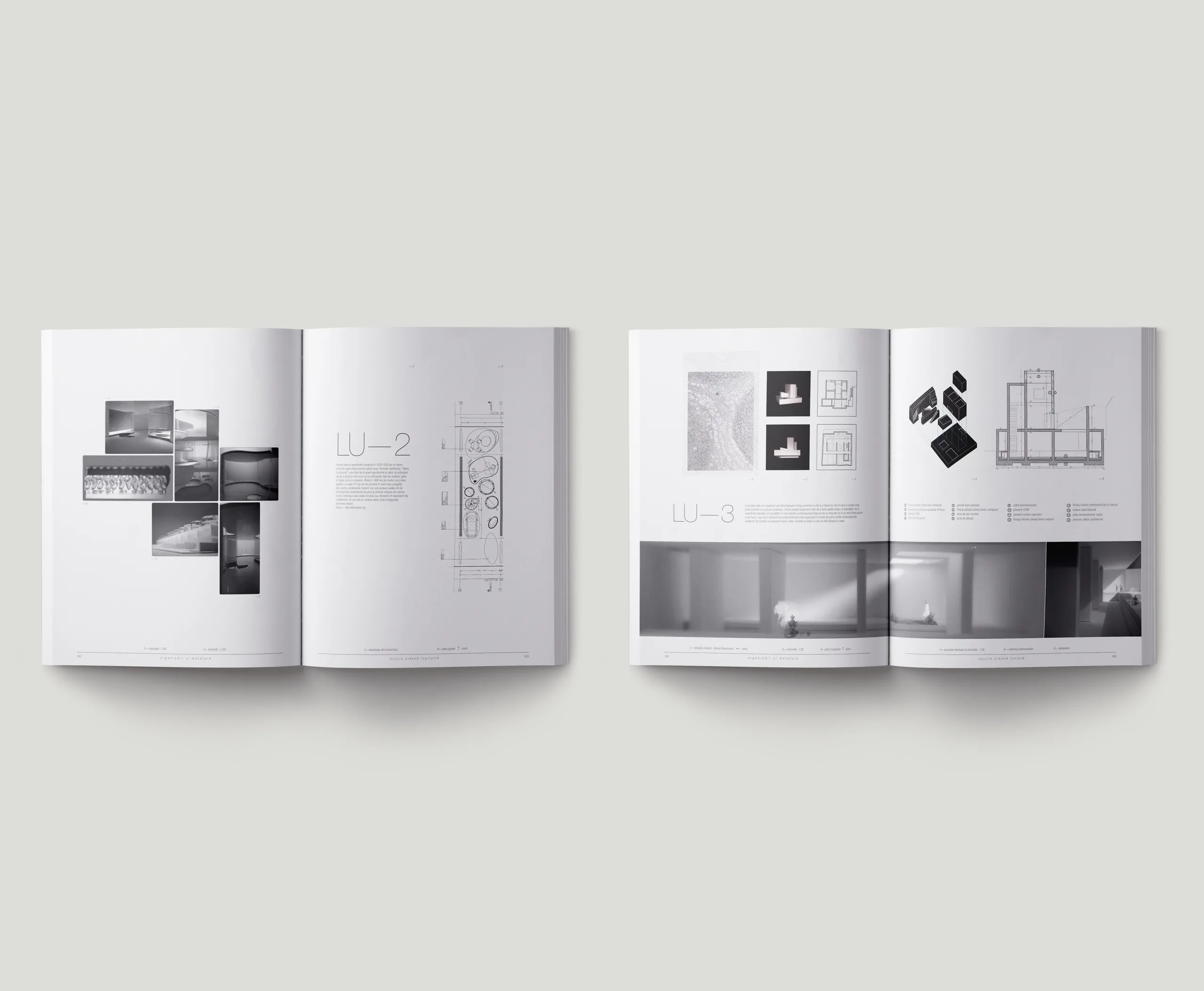
Organizări și Metafore cataloghează proiecte de nivel mediu, prin aceasta înțelegându-se spații fără exagerări formale ori excese de ordin dimensional.
Exercițiile surprind minimul necesar cu măsura potrivită, astfel încât utilizatorii să se poată identifica cu fiecare spațiu propus și cu mobilarea specifică programului: locul odihnei, locul de stat și vorbit, locul pentru mâncat, locul pentru citit etc. Studiile urmăresc și legătura dintre funcțiunea principală și terenurile aflate în proprietate, precum și relația acestora cu vecinătatea și cadrul natural.
Volumul a fost publicat inițial în 2014 sub titlul VM Docs, fiind ulterior revizuit și integrat ca al treilea capitol al Jurnalului de Lucrări Creative.
Tratează-ți fiecare desen ca pe o operă de artă.
Organising Metaphors catalogues a series of intermediate-scale projects, understood as spaces without formal exaggeration or dimensional excess.
The exercises capture what is necessary, in the right measure, allowing users to identify with each proposed space and with the furnishings specific to its programme: a place to rest, a place to sit and talk, a place to eat, a place to read, and so on. The studies also examine the relationship between the principal function and the land it occupies, as well as its connection to the surrounding context and natural setting.
The volume was originally published in 2014 under the title VM Docs, and was later revised and incorporated as the third chapter of The Journal of Creative Works.
Treat each drawing as a work of art.
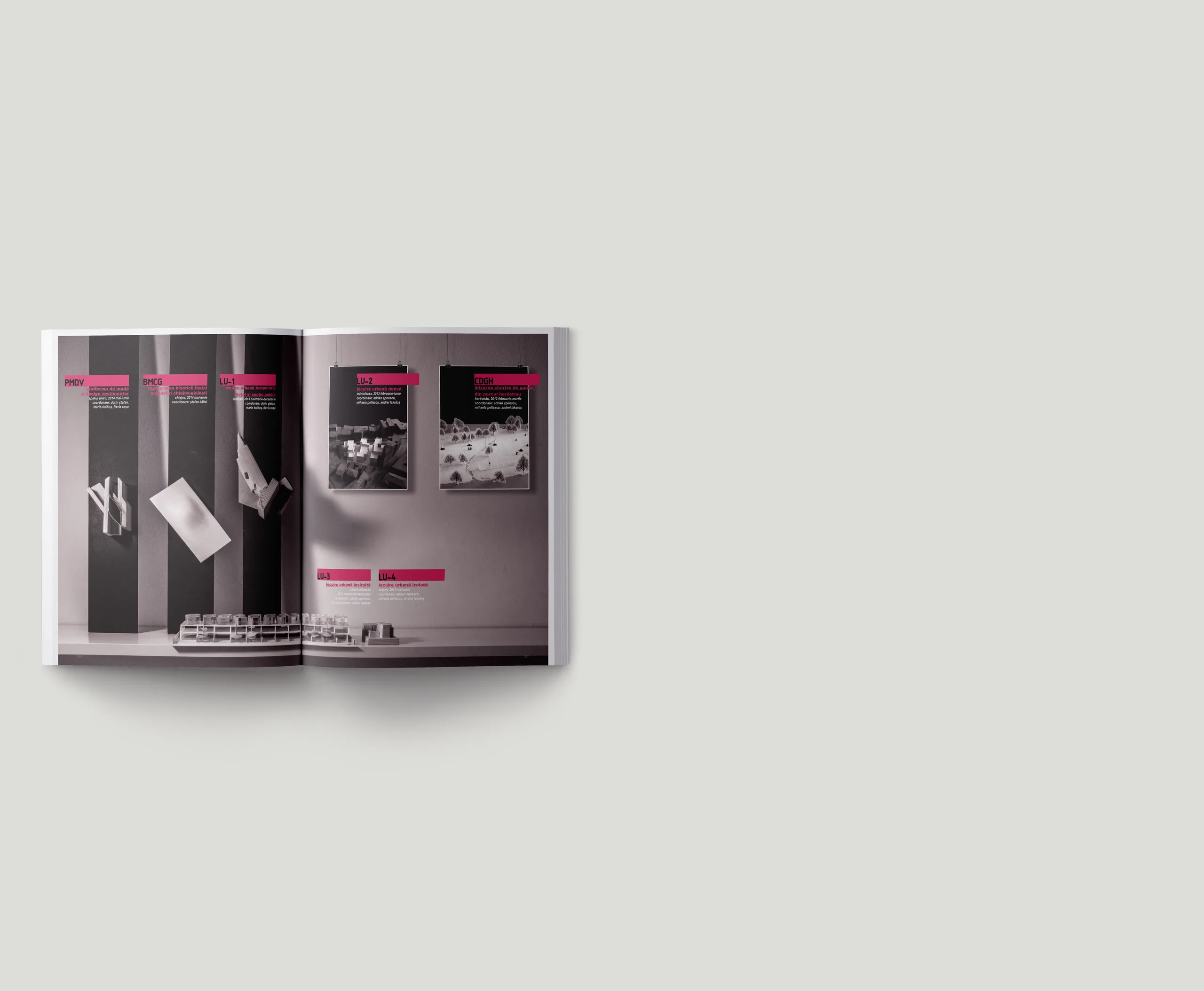
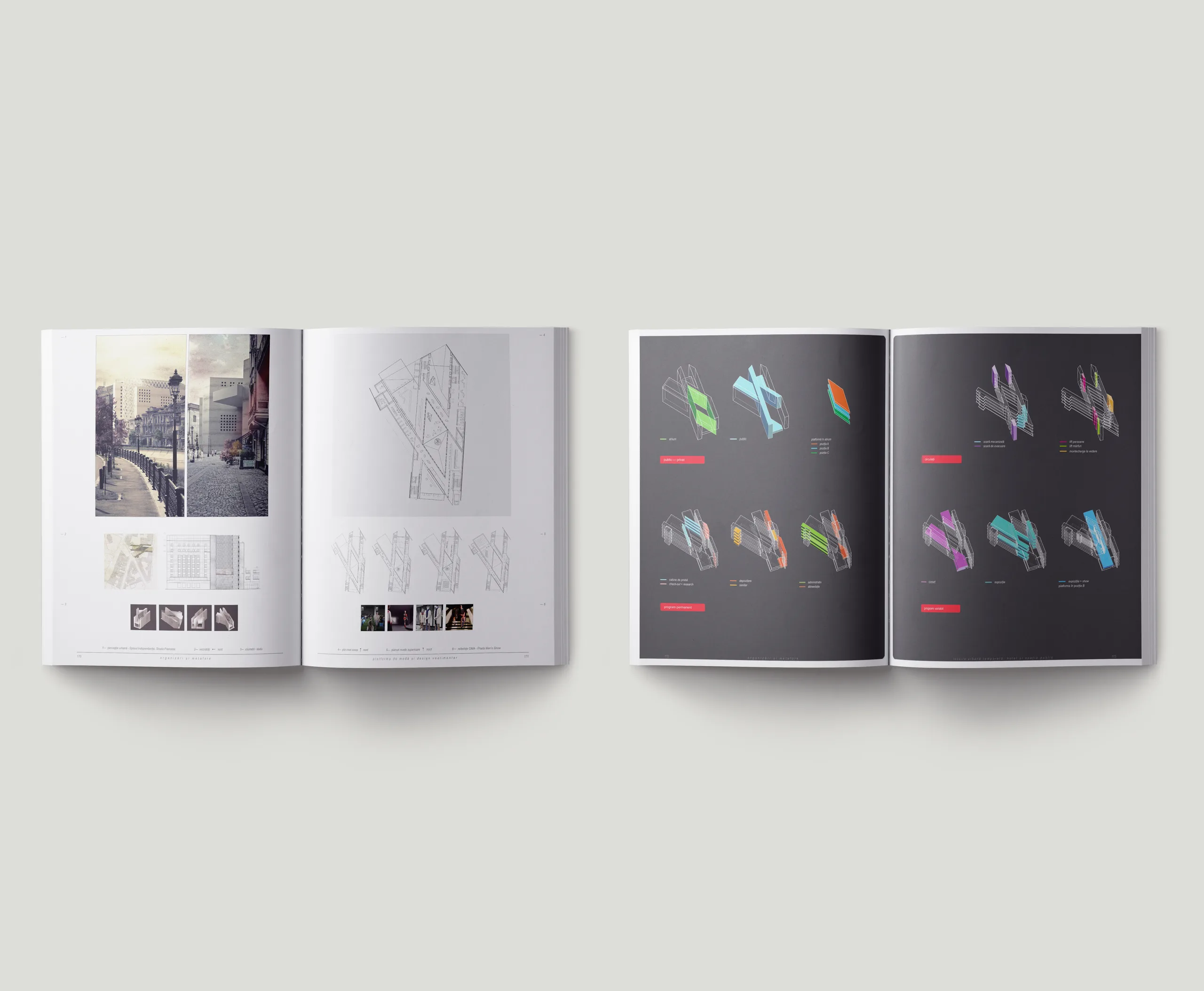

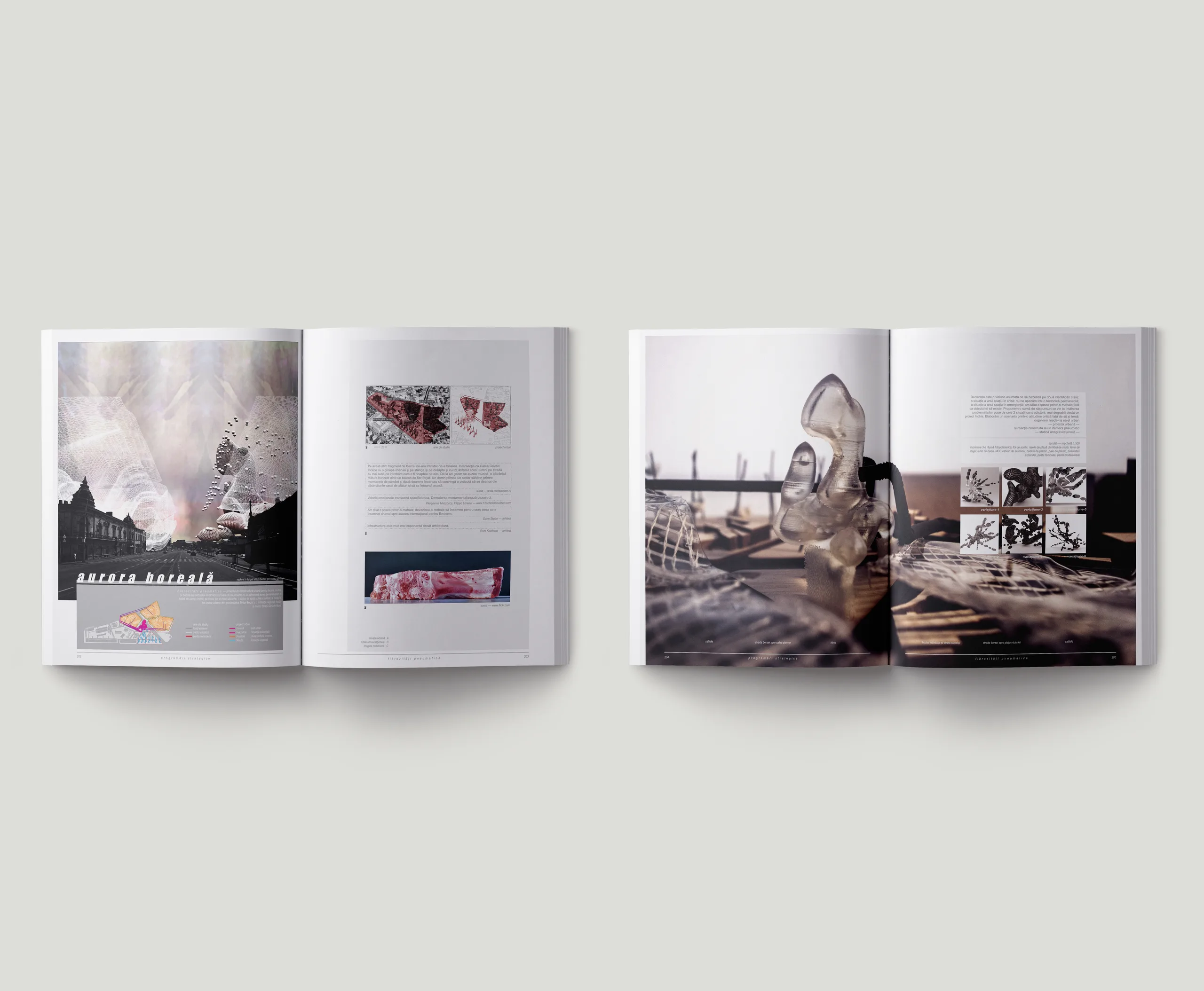
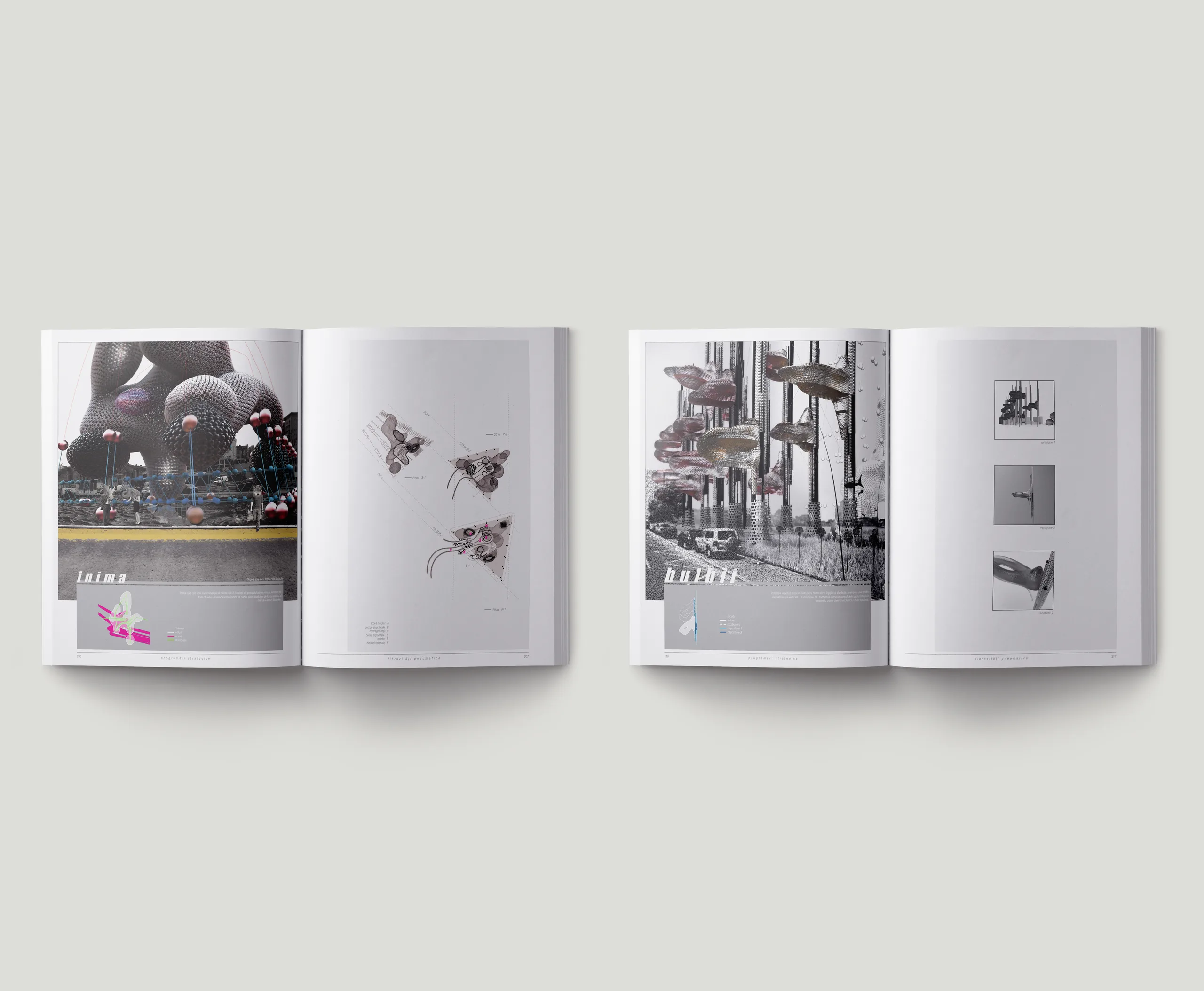
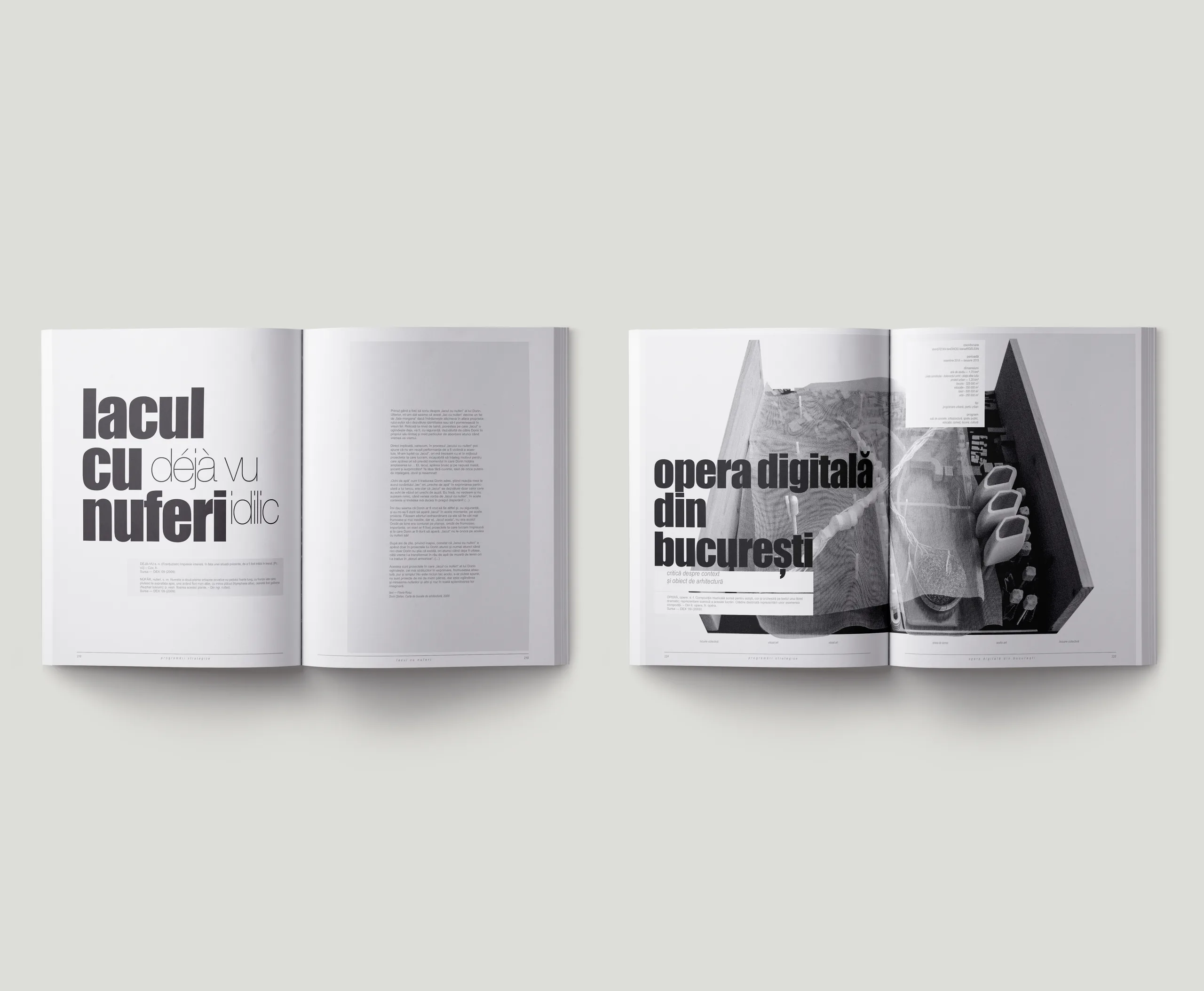
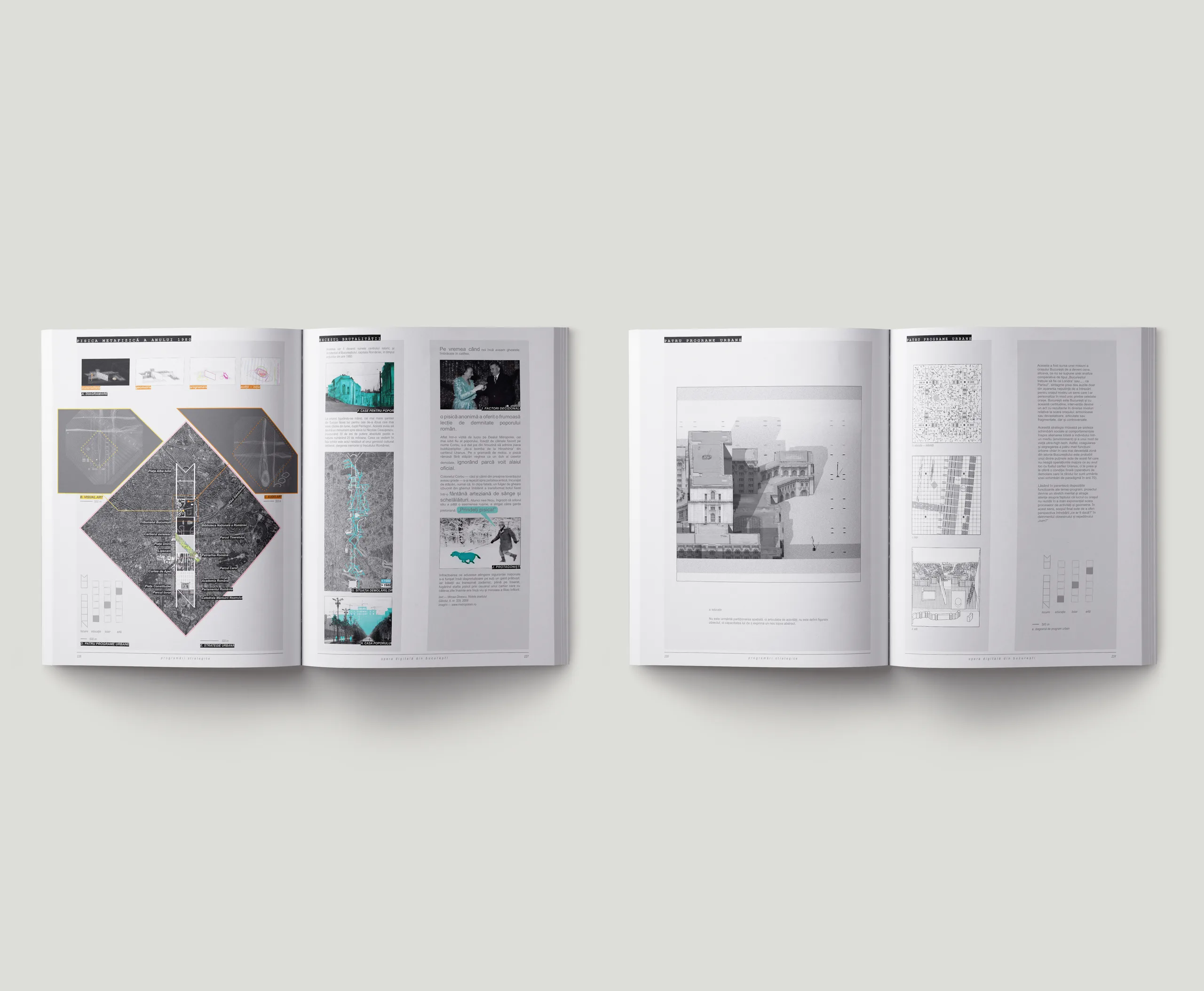
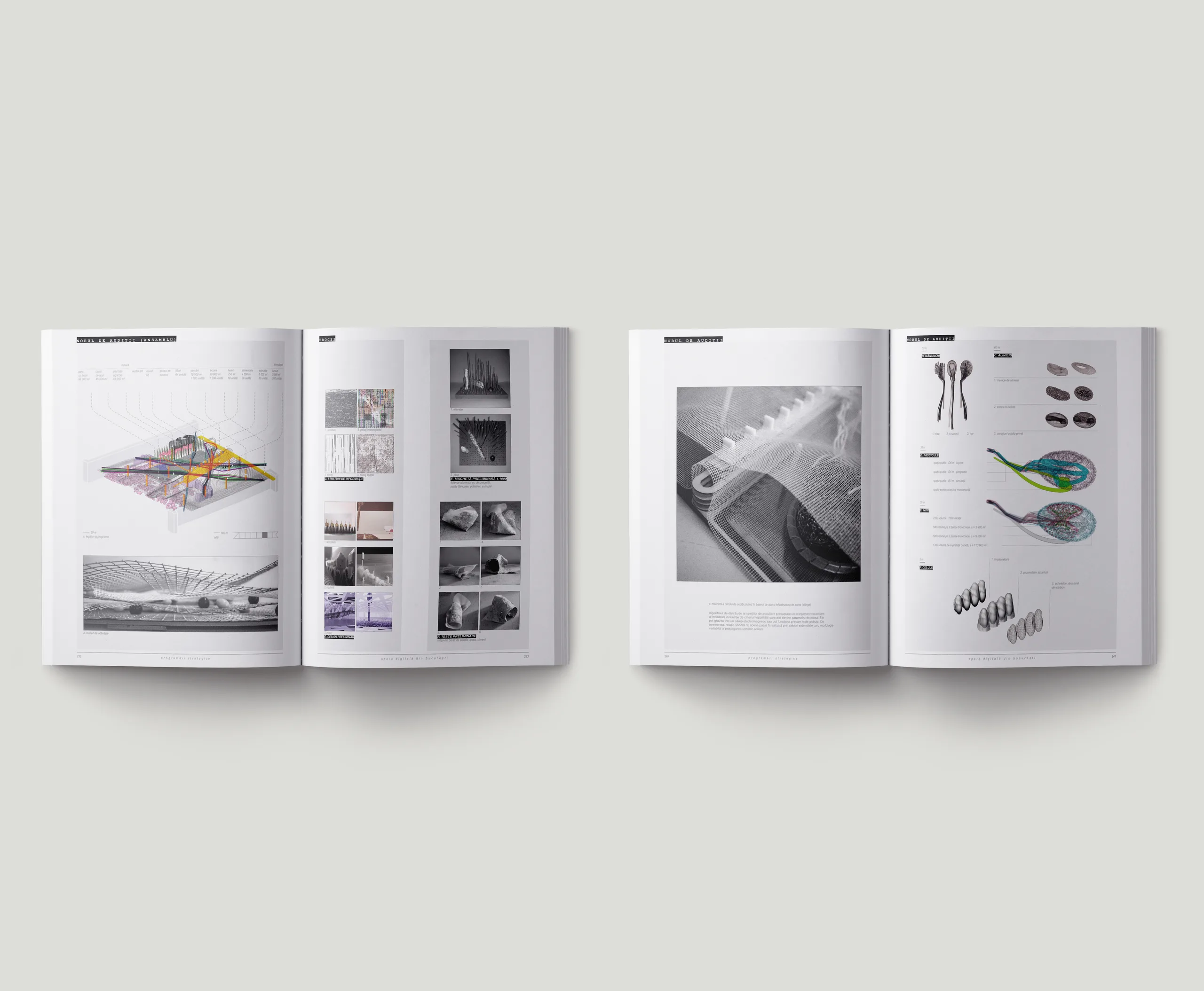
Programări Strategice abordează arhitectura avansată și se distinge prin scara mare a proiectelor, dar și prin densitatea și complexitatea situațiilor urbane abordate.
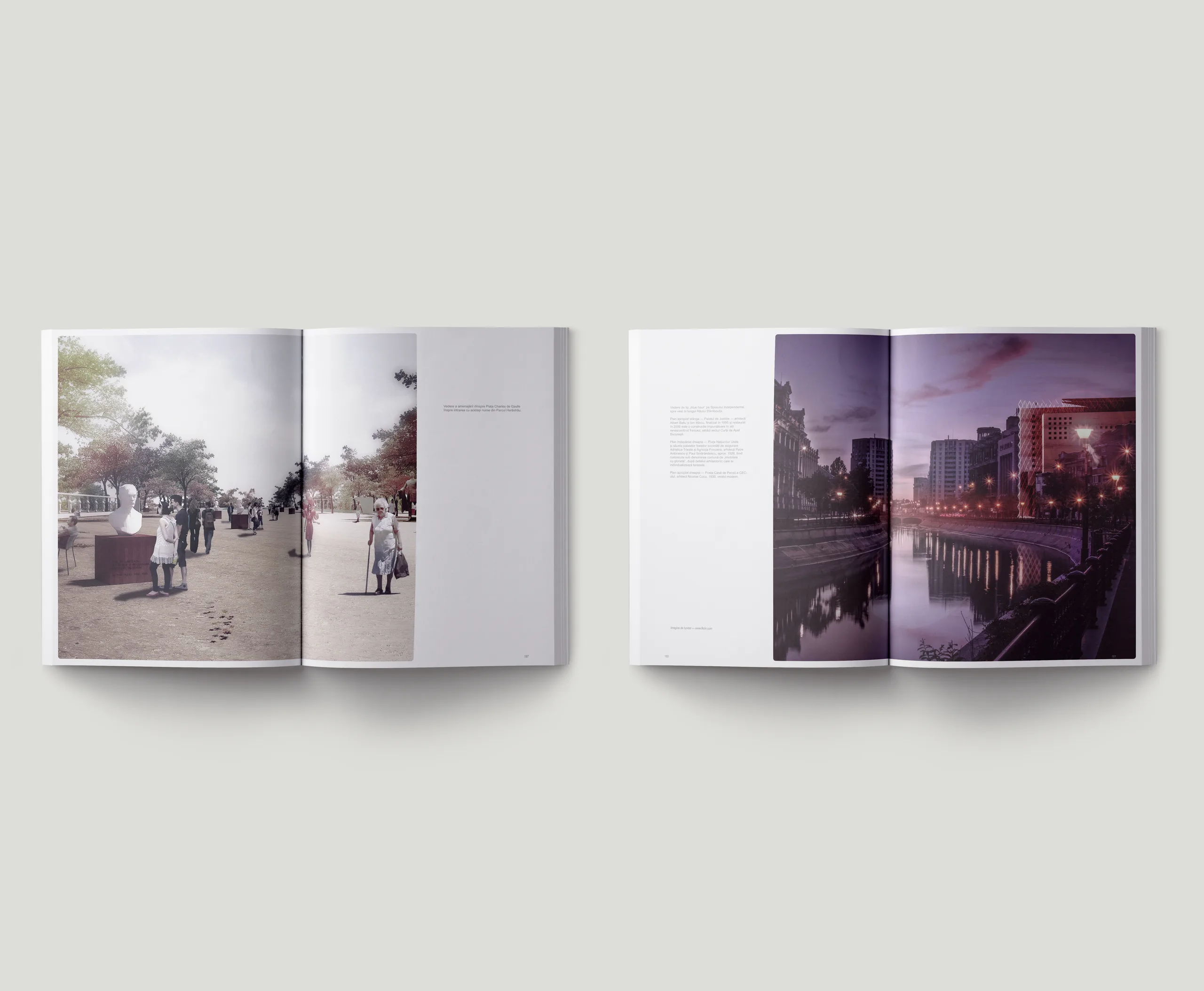
Lucrările au fost publicate inițial în volumul BUCURESTIinCONTEXT Alles ist Kontext, care conținea trei eseuri structurale ce însumează arii de studiu de peste 2 milioane de metri pătrați. Acestea investighează teme de tip mental stretch și tehnici de programare strategică urbană sub diferite scenarii și scări de reprezentare ale orașului București. Volumul este al patrulea și ultimul capitol cronologic al Jurnalului de Lucrări Creative.
Nu vă mai întrebați ce aveți de făcut: faceți pur și simplu. Fiți performanți. Fiți intuitivi. Genializați-vă. — Constantin Necula
Strategic Programming addresses advanced architecture and is distinguished by the scale of its projects, as well as by the density and complexity of the urban situations they engage with.
The works were originally published in the volume BUCURESTIinCONTEXT Alles ist Kontext, which contained three structural essays encompassing study areas of more than two million square metres. These investigate mental-stretch themes and techniques of strategic urban programming through different scenarios and scales of representation of Bucharest. The volume forms the fourth and final chronological chapter of The Journal of Creative Works.
Stop asking what you have to do: simply do it. Perform. Be intuitive. Make yourself brilliant. — Constantin Necula